
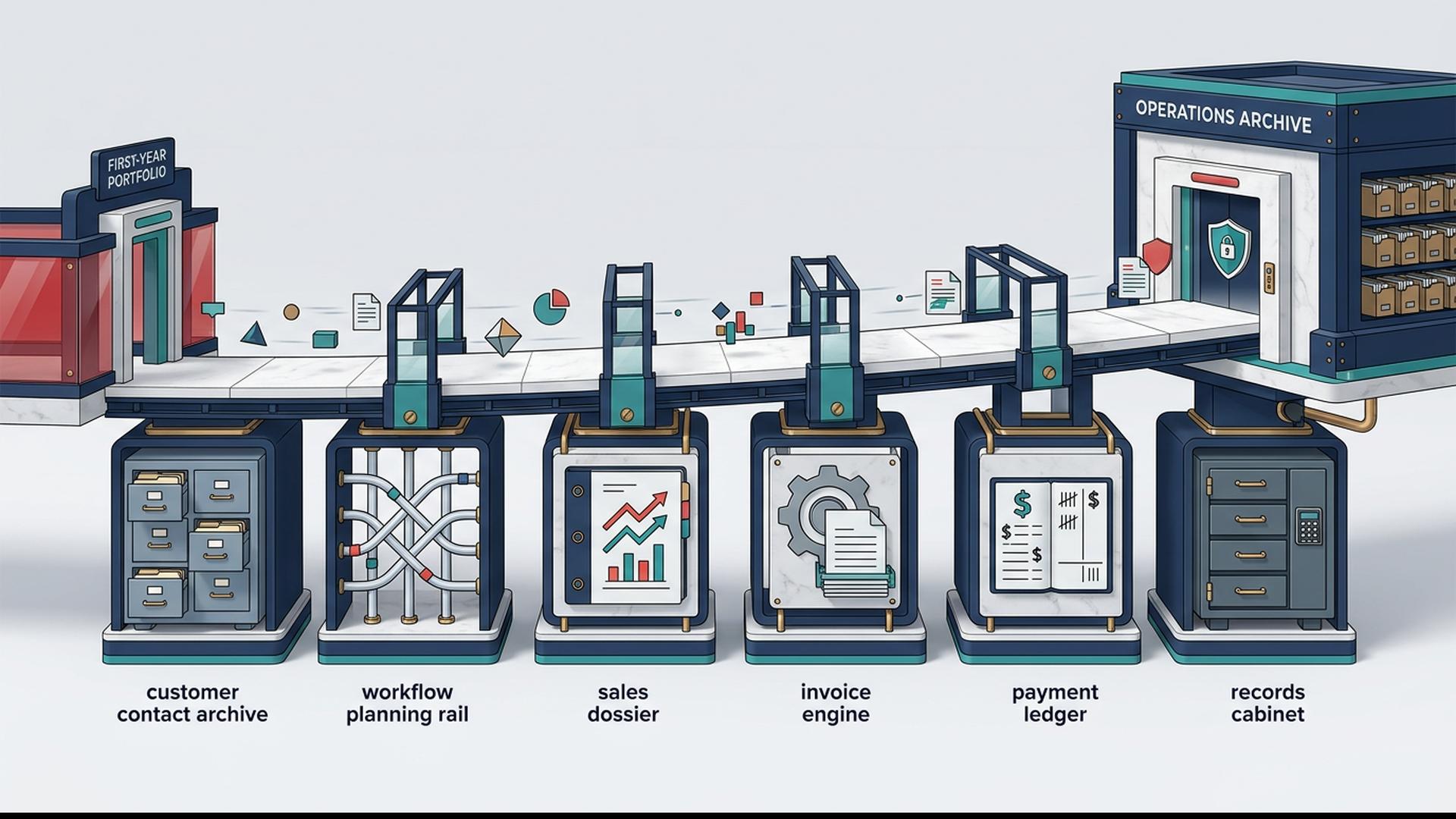
Six Foundational Tools US Small Business Owners Should Adopt Within Their First Year
Surviving the opening year of a US small business is largely a matter of how fast an owner can put working systems in place while still pushing growth forward. Owners who come through this stretch in good shape are typically the ones who tackle the big operational choices early, locking in the right software before problems pile up, instead of spending twelve months trying to retroactively organize a mess that's already happened.
The tools that keep a small business functioning smoothly are, for the most part, neither costly nor difficult to implement. Skipping them tends to cost more in the end, whether through wasted hours, missed chances, or money left unclaimed come tax season, than simply paying for the software itself. Below is a rundown of what belongs on the setup list during year one.
1. Sage Handles the Numbers So Nothing Slips Through
Sage functions as the financial base layer that shapes every other decision an owner makes. From day one it logs incoming and outgoing money, syncs with the business bank account to pull transactions in automatically, manages invoicing, oversees sales tax, and generates the reports needed to see, at any moment, how the business is actually doing.
Owners in the US who must file quarterly estimated taxes benefit from Sage's ongoing snapshot of profitability and tax liability, since it lets those payments be calculated from real numbers instead of rough estimates. Business owners with staff or contractors also gain from payroll integration, which keeps compensation costs visible within the overall financial picture at all times.
Why it matters: Keeping accurate, up-to-date financial records from the outset avoids the year-end rush, sharpens tax accuracy, and gives every business decision a solid financial grounding.
2. Protecting Business Logins With LastPass From Day One
Within weeks, a new small business ends up holding a long list of sensitive logins: bank accounts, accounting software, payroll systems, an IRS account, state tax portals, and various client platforms. Handling all of this without a password manager forces a choice between reusing the same password everywhere, a serious security gamble, or keeping a written list somewhere, which carries its own set of risks.
LastPass keeps every credential inside an encrypted vault, builds strong, unique passwords for each new account, and fills them in automatically, so security doesn't come at the cost of convenience. Since a business owner is often the only person responsible for guarding all of this access, the protection LastPass offers carries outsized value relative to its cost.
Why it matters: One compromised login during year one can trigger financial and reputational fallout that costs far more to fix than any single tool mentioned here.
3. Collecting Payments Faster Through Stripe
How quickly and easily a business gets paid is one of the more direct ways it can influence its own cash flow early on. Stripe lets a business accept credit and debit card payments through its website, via invoices, or through payment links, with quick settlement and pricing that's easy to understand. Because it links directly to Sage, every payment received gets logged in the books automatically, with no manual entry required.
For US small businesses that bill clients or sell products online, adding a smooth card payment option to every invoice cuts down noticeably on how long it takes to get paid, and reduces how hard the owner has to chase down overdue balances.
Why it matters: Making payment as easy as possible speeds up cash flow and cuts the time spent hunting down unpaid invoices, starting with the very first one sent out.
4. Letting Calendly Take Over the Booking Process
The email back and forth involved in setting up meetings is a small but constant drain on time for any business that deals directly with clients. Calendly gets rid of it by syncing with a calendar and letting clients, prospects, and contacts book time directly into open slots, with confirmations and reminders sent automatically to everyone involved.
For an owner juggling current clients while also chasing new business, automating scheduling ensures every open slot actually gets used and nothing slips through simply because a follow-up never got sent.
Why it matters: Automating the scheduling process removes a friction point that, left alone, adds up to a meaningful chunk of lost time across a full year.
5. Staying Compliant on Payroll With Gusto
For any business with employees or contractors, staying compliant on payroll is one of the heaviest obligations that comes with operating in the US. Federal withholding, FICA taxes, state income taxes, unemployment insurance, W-2s, and 1099s all have to be filed correctly and on schedule, and mistakes or late filings come with real penalties.
Gusto handles the entire US payroll process automatically, from calculating the right deductions to remitting taxes and filing the necessary paperwork on the business's behalf. It also covers employee onboarding, benefits management, and gives employees a self-service portal, consolidating a handful of manual HR tasks into one platform that connects with accounting software.
Why it matters: Payroll mistakes and missed filings open the door to IRS scrutiny and employee friction, both expensive and slow to untangle. Gusto keeps both risks off the table from the start.
6. Shaping a Polished Brand Image Using Canva
A business's visual identity matters from the very first moment a prospective client or customer encounters it, and Canva makes building that identity possible even without any design background. Whether it's a logo, business cards, social posts, proposals, or invoices, Canva supplies professional templates that can be adjusted with the business's own colors and fonts to keep everything looking consistent and polished.
For a young small business that isn't yet ready to hire a design agency or bring on an in-house designer, Canva delivers the visual consistency that builds trust and credibility at every point of contact.
Why it matters: A polished visual identity tells prospective clients the business is credible and competent before a single conversation happens, and Canva puts that within reach from day one.
Frequently Asked Questions
What kind of software budget should a US small business owner plan for in year one? A basic stack covering accounting, payroll, payment processing, scheduling, and security generally runs between one hundred fifty and four hundred dollars a month, depending on which tools and plan tiers are chosen. The payoff, in hours saved, tax deductions properly captured, and fewer administrative errors, usually shows up as a positive return within just a few months.
At what point does a US small business need to register for sales tax? Whether a business owes sales tax in the US depends on the state it operates in and the states where its customers are located. Following the Supreme Court's 2018 ruling in South Dakota v. Wayfair, economic nexus thresholds- generally one hundred thousand dollars in sales or two hundred transactions- can create a sales tax obligation even in states where the business has no physical presence. Solid accounting software tracks sales state by state and flags when a nexus threshold is approaching.
Is a separate business bank account necessary in year one? Yes. Keeping business and personal money apart is one of the more important administrative moves a new small business owner can make. It shields personal assets from business liabilities, makes tax prep considerably easier, and produces the clean financial record needed for loan applications, audits, and business valuations. Most banks offer basic business checking with fees that are minimal at most.
What's the right way to handle quarterly estimated tax payments as a small business owner? Self-employed owners in the US generally need to send the IRS quarterly estimated payments covering both income tax and self-employment tax. These are usually due in April, June, September, and January. Accounting software such as Sage keeps a running estimate of tax liability throughout the year, which makes calculating accurate quarterly payments far simpler than guessing and risking an underpayment or overpayment.
What financial mistake trips up new US small business owners most often? Not setting money aside for taxes throughout the year tops the list of common financial mistakes, closely followed by blending personal and business finances. Both are straightforward to avoid with the right systems in place from the beginning. Accounting software that tracks tax liability in real time, paired with a dedicated business bank account, addresses both problems at once.